A Thirty-Year Promise Kept: Plaque Unveiling and Consecration Ceremony for the Welcoming Deity Pavilion at Tuku Beiji Temple, Alian
06/02/2026
Summary Shao Yung-tien, President of Yuimom Group, presents a landmark of contemporary landscape art dedicated to Xuan Tian Shang Di, fulfilling a lifelong vow.
At 11:11 AM yesterday (Feb 6th), the Tuku Beiji Temple in Alian, Kaohsiung, held a grand ceremony for the plaque unveiling and consecration of its new "Welcoming Deity Pavilion" (Ying-Shen Lou). This event marks a magnificent new chapter for the ancestral temple, which boasts nearly 360 years of history.
Integrating contemporary architectural language with traditional Southern-style Chien-nien (cut-and-paste) craft, the Welcoming Deity Pavilion is more than just a revitalized religious space. It represents the realization of a conviction held for thirty years—a monumental piece of landscape art created for the community and built upon faith.
The Beiji Temple ancestral shrine was established in 1667, the sixth year of the Kangxi reign in the Qing Dynasty, with its incense fires burning continuously for nearly 360 years. Shao Yung-tien, President of Yuimom Group, was born in the 300th year of the temple’s history. Attributing it to "divine destiny," he recounted receiving instructions from Xuan Tian Shang Di thirty years ago to complete the Welcoming Deity Pavilion for the ancestral temple. However, being young at the time, it was difficult to initiate the project immediately. He could only bury this divine oracle and promise deep within his heart, letting time bear witness. After twenty-five years of selfless devotion and advocacy, he finally gained the approval of the temple elders. Five years ago, the construction officially commenced, with Yuimom Group taking full responsibility for the planning, design, and construction, finally completing this long-awaited piece of the spiritual puzzle for the ancestral temple.
During the plaque unveiling and consecration ceremony of the Welcoming Deity Pavilion at Tuku Beiji Temple in Alian on February 6, President Shao Yung-tien fulfilled a thirty-year vow, presenting a masterpiece of contemporary landscape art born from half a lifetime of faith to Xuan Tian Shang Di. According to sources, the pavilion project spanned five years with an investment of approximately NT$50 million. Utilizing 200 tons of rebar, the structure stands 14.7 meters tall with eight massive pillars, each 1.3 meters in diameter, creating a majestic and stable presence. The entire project was executed by Royal Prime Construction under Yuimom Group, in collaboration with professional teams including Hsin Yi Chuan Architects, Tien Heng Engineering Consultants, and Master Lin Da-wei of Moon River Lighting Design. This partnership achieved a profound balance between structural safety, proportional aesthetics, and nocturnal light and shadow, ensuring the building feels modern yet retains the solemnity and tranquility essential to a temple.
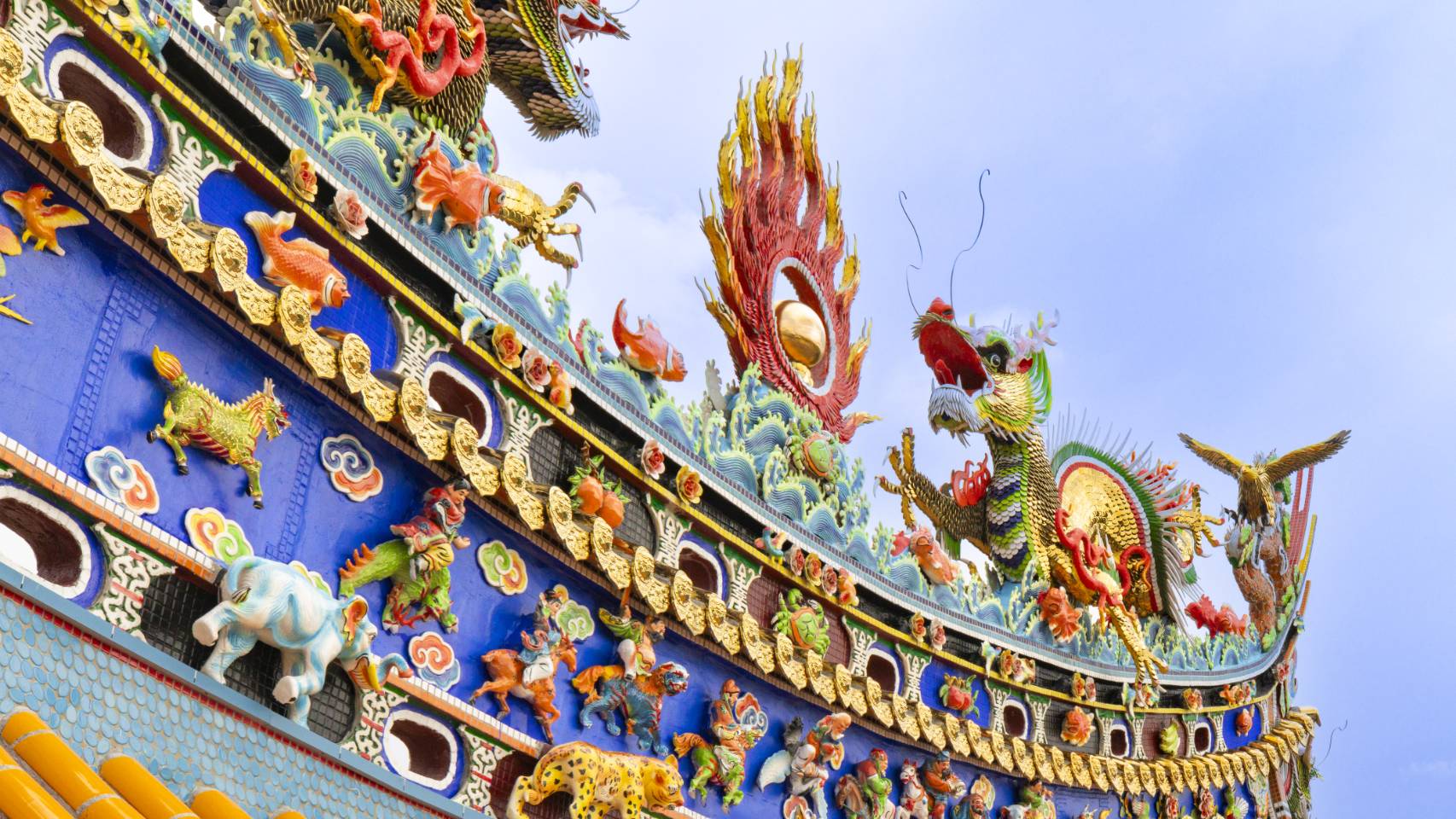
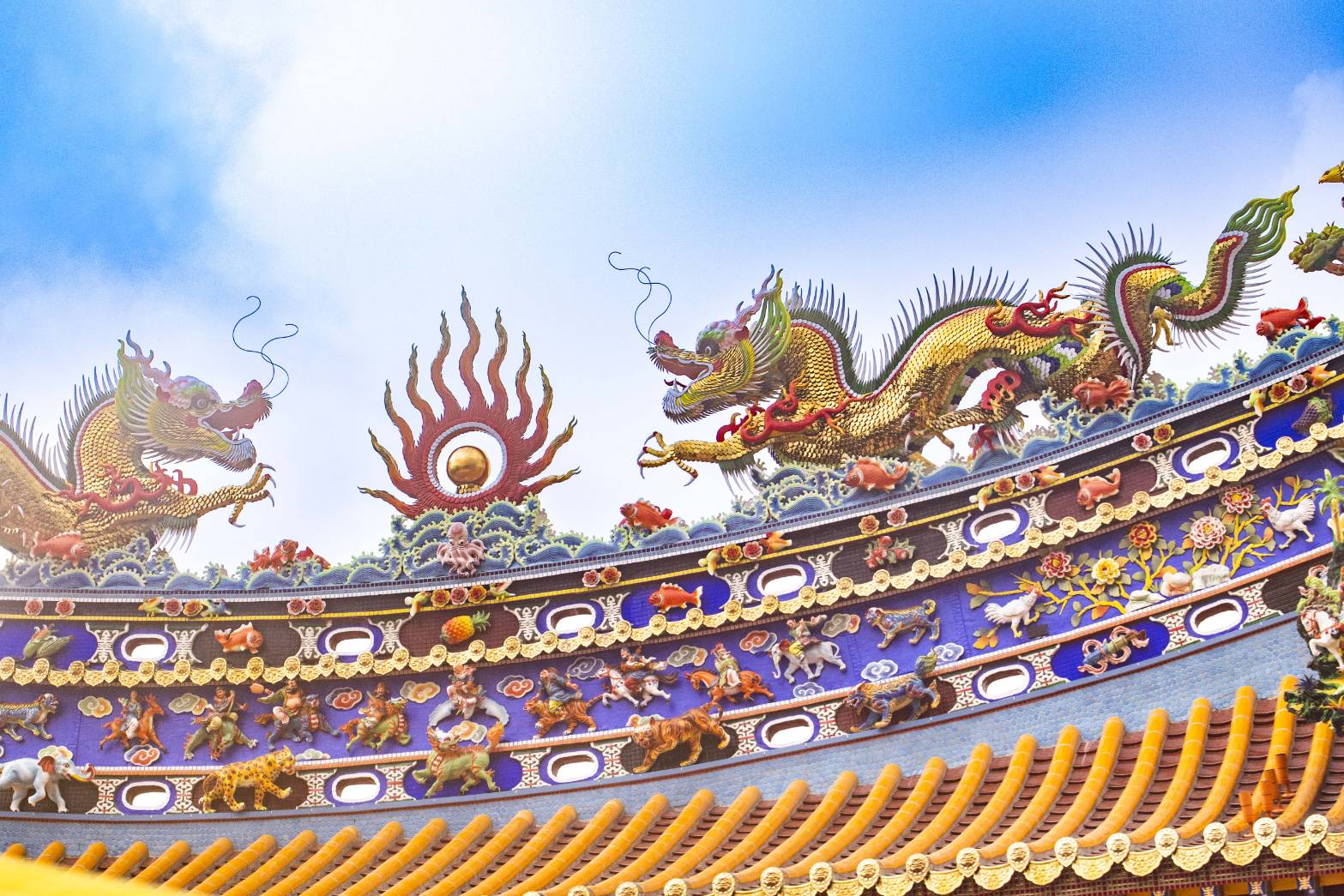
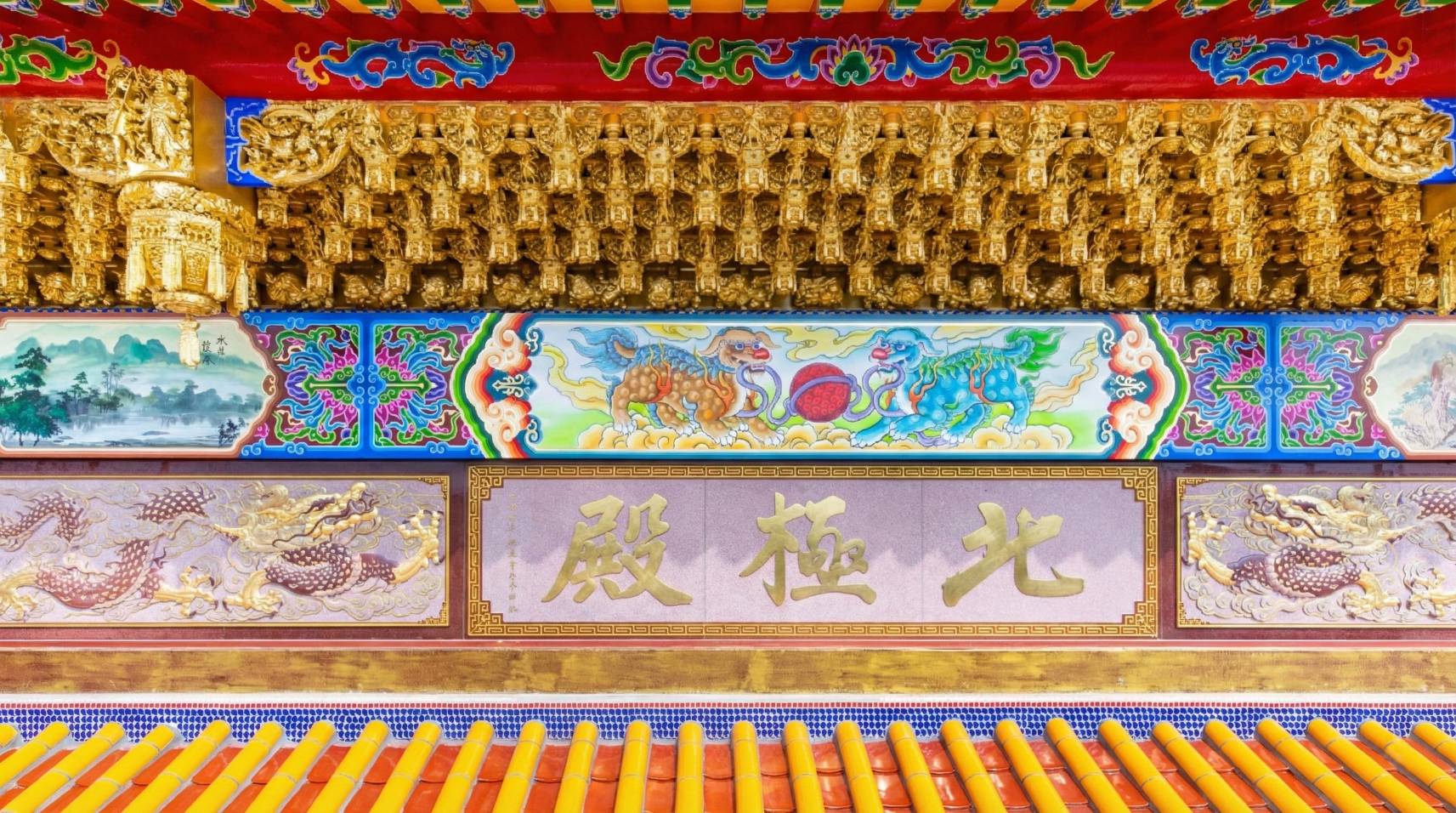
Departing from the vibrant colors of traditional temples, the Welcoming Deity Pavilion is renowned for its restrained, fashionable style and exquisite craftsmanship. The roof ridges and components are covered in gold leaf, with the facade featuring extensive bas-relief and raised carvings. The eaves of the gateway are arranged in an interlocking yin-yang pattern, creating distinct layers. The dripstones are plated with liquid gold, shimmering vibrantly under the sun. The "Chien-nien" (cut-and-paste) craft carries on the Southern style, using the dragon, phoenix, Ao, and Qilin Prince to symbolize the four elements of Heaven, Earth, Water, and Man, representing universal order and the cycle of life. Among these, the twin dragons crafted from gilded tiles possess an extraordinary aura, symbolizing divine protection and the spirit of the kingly way. Ten divine beasts, including stone lions, Qilin, and dragon-turtles, stand before the pavilion in a protective formation, signifying the safeguarding of the temple and peace in all directions.
Shao Yung-tien described the Welcoming Deity Pavilion as a masterpiece of "Fashionable Southern Chien-nien" that combines contemporary visuals with traditional skills—it is not merely a religious building, but a piece of landscape art that will stand for a thousand years. In his self-penned article, A Thirty-Year Promise, he wrote: "Humans live for a century; Gods for ten thousand years," using this as a footnote to the spirit of the pavilion. He also used the final line of his own couplet, "Forever touching the Heavens, eternally rooted in the Earth," expressing his hope that the building, like a vigorous giant tree with deep roots and lush leaves, will endure in the collective memory of the local community and believers.
The ceremony also featured the unveiling of a plaque and couplets personally inscribed by President Shao. The plaque, "Eternal Radiance," symbolizes Xuan Tian Shang Di as the North Star, forever shining upon the world and guiding all living beings. The eight-line couplet begins with the light of the northern starry sky, extending to the divine power and virtue of the deity in vanquishing demons and protecting the people, finally concluding in a realm where Heaven and Earth correspond. This condenses faith, universal order, life resilience, and earthly responsibility into a spiritual inscription for this divine pavilion. "To spend thirty years keeping a promise to a God, there are countless people to thank; I shall summarize it all as 'Gratitude to Heaven,'" Shao wrote at the end of his text. The completion of this pavilion is not just the conclusion of a construction project, but a life chronicle of conviction, time, and craftsmanship. It witnesses a believer’s half-century journey in responding to a divine oracle and provides a contemporary spiritual landmark for the Tuku Beiji Temple. From a social perspective, its completion holds clear public significance, bringing a new cultural landmark to the region and providing a modernized yet essential model for Taiwanese religious architecture.